


Strategic Line 01
Climate Cost & External Requirements
Regulation, trading relationships, financing terms and public commitments change a company's costs and business choices. Steinlux helps clarify these requirements, look across emissions from operations, purchased energy and the value chain, and plan the response, abatement and implementation.
External Context & Needs
Where do climate requirements come from, and how do they reach a company?
Climate requirements reach a company's operations and decisions through regulation, trading relationships, financing terms and public commitments. The first step is to understand why the other party needs the information, in what form it has to be delivered, and when it starts to affect quotes, budgets or partnerships.

Regulatory Obligations & Carbon Pricing
Rules where a company operates and where it sells can bring reporting duties, carbon costs and product data requirements. Companies need to separate their own legal obligations from the data and contract terms passed on by importers or customers.
Commercial Terms & Supply Chain Relationships
Buyers make requests through procurement specifications, supplier assessments and data requests. Suppliers' costs, materials and energy choices can also affect pricing and supply. Companies need to manage these changes on both the buying and the selling side.
Capital Allocation & Financing Requirements
Investors and banks may ask for information on climate risk, emissions and transition plans. Companies should identify why it is being reviewed and how it will be used in engagement, investment decisions or the terms of a specific financing.
Public Commitments & Market Expectations
The targets a company sets for itself, the initiatives it joins and the claims it makes also need sustained action and evidence. Headquarters can turn targets into tasks for sites and departments, and customers and other stakeholders may check on progress.
Business Impact
Which business conditions do external requirements change?
A single requirement can affect costs, trade and internal responsibilities at the same time. Working back from the decisions it affects is how you confirm what data is needed, who responds, and when preparation has to begin.
Costs & Budgets
Identify carbon costs, spending on data and verification, and outlays on energy, materials or equipment improvements. Separate costs already incurred, costs that may arise under certain conditions, and costs that action can change.
Commercial & Partnership Terms
Check product or supplier eligibility, data delivery, pricing and the allocation of responsibilities. Customer response dates and contract renewals determine when a company needs a plan it can adopt.
Financing & Asset Planning
Consider the information needed for investment or financing together with the service lives of equipment, leases and assets. Reporting deadlines and investment lead times need to be aligned before budgets are set.
Targets & Organizational Roles
Group targets need to be translated into responsibilities for operating sites, procurement and products. When a company is at once an operator, a supplier and a buyer, it should align data boundaries, delivery formats and annual progress.
Strategy 01
Determine the scope and priorities of the response

Look at compliance, requirements, commitments and business impact together to confirm what the company needs to address first.
We confirm which markets the company operates or sells in, what customer, investor or lender requests it has received, and what commitments it has already made, and use that to determine which obligations and commercial terms apply. We then clarify what information, abatement results or evidence has to be delivered, who is responsible and by when.
We review emission hotspots, target gaps and cost impacts across Scope 1, 2 and 3, compare the abatement potential, resource needs and timing of each improvement, and help the company decide which issues and solutions to prioritize.
Align Requirements & Boundaries
Confirm who the response is for and which sites, products and periods it covers, and distinguish legal obligations, commercial agreements and the company's own targets.
Identify Gaps & Priorities
Compare cost impact, data gaps, degree of control and lead time so that every investment has a clear rationale.
Compare What Each Option Requires
Compare cost, expected results, supply and accounting conditions first, then confirm a workable order of investment.
Strategy 02
Compare responses and abatement options across all scopes
Select workable ways to reduce emissions across your own operations, purchased energy and upstream and downstream activities. Steinlux helps compare operational improvements, energy and materials procurement, supply chain collaboration and transaction arrangements.
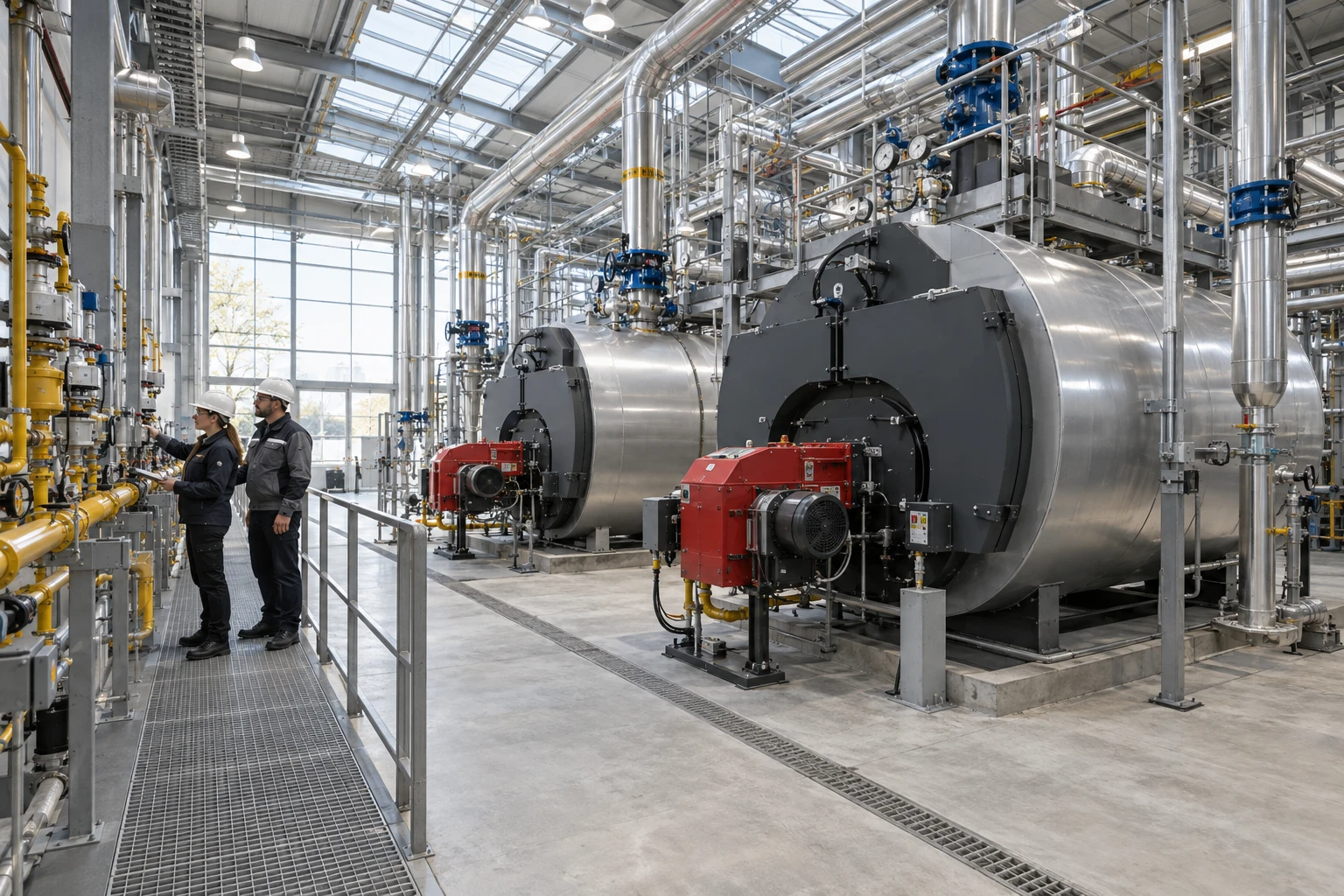

Scope 1 | Own Operations
Identify opportunities in processes, equipment, fuels, vehicles and fugitive emissions, and compare solutions such as process improvements, efficiency gains, electrification, fuel switching and biomethane certificates.
Explore Scope 1 abatement options →Scope 2 | Purchased Energy
Cover purchased electricity, steam, heat and cooling, and assess efficiency, alternative energy and the low-carbon energy procurement portfolio against operating costs, energy reliability and emissions targets.
Explore Energy & Scope 2 →Scope 3 | Upstream & Downstream Value Chain
Based on value chain hotspots and where the company has influence, look first at purchasing, logistics, product use and end-of-life treatment, and drive upstream and downstream reductions through supplier engagement, changes to materials and design, and transport optimization.
Explore Scope 3 value chain management →
Strategy 03
Keep actions and results responsive to requirements
Turn the chosen options into a division of work, deliverables and tracking, and confirm how the results can be used.
Steinlux coordinates internal teams, specialist partners and suppliers, defining decision rights, data provision, implementation conditions and how results are reviewed. Work can start with one site, product or procurement category and expand as conditions allow.
We track actual costs, operating performance, emissions and progress toward targets, and check whether the results meet the original requirements. When capacity, supply, rules or customer terms change, the assumptions and plans are updated, with room left to adjust.
How Results Are Interpreted and Used
Avoided Emissions | Often Called Scope 4
Compare the emissions of a solution against an alternative scenario, and state the baseline and estimation boundary. Report them separately from the Scope 1–3 inventory, without netting them off directly.
Services & Influence | The Broader Scope X View
Look at the increases or reductions in emissions enabled by services and client relationships. Scope X has no standard accounting definition, so the purpose, mechanism and evidence have to be stated first. Activities already covered by Scope 3 rules stay in their original categories.
Integrated Planning
Start from your situation and go deeper into the relevant topics

Depending on your current requirements and decisions, learn more about carbon costs, accounting, supply chain management, abatement assessment and disclosure quality. Energy arrangements and contributions to emission reductions also connect to the other strategic lines.
CBAM & Climate Cost Management
Identify the scope, data responsibilities and financial impact of CBAM, Taiwan's carbon fee and supply chain carbon costs, and set out management options.
Carbon Accounting & Climate Disclosure
Set GHG accounting boundaries, data structures and a disclosure foundation for the different decisions made at the organization, product and value chain level.
GHG Protocol Scope 3 Supply Chain Management
A company's products, purchasing and services are tied to upstream and downstream emissions. Brand, group and disclosure requirements pass data and abatement responsibilities on to suppliers, and make procurement the starting point for ongoing management.
Operational & Value Chain Abatement Strategy (Scope 1/3)
Starting from operational and value chain hotspots, compare process, fuel, procurement, logistics and product improvements to build a workable abatement mix.
Disclosure Quality & Claim Risk
Check the scope, evidence and consistency of climate disclosures, targets and public claims, and set up traceable review and governance.
Environmental Commodity Selection & Cross-Border Implementation
Match consumption sites, intended use and reporting periods to the right EAC system, then connect procurement and use in each market.

Projects & Tools
Project Services & Further Resources
CBAM Embedded Emissions Reporting & Verification Readiness
Using installation data for goods in scope of CBAM, prepare the documentation needed for embedded emissions, precursors, electricity, carbon prices paid abroad and verification.
ISO 14064-1 Organizational GHG Inventory
For an agreed organizational boundary and reporting year, build the GHG inventory, calculation files and verification-ready documentation.
GHG Protocol Corporate GHG Accounting & Reporting
We define organizational and operational boundaries under the GHG Protocol Corporate Standard and build Scope 1, 2 and 3 emissions accounting and annual reporting.
HCMI Hotel Carbon Measurement & Data Quality Improvement
Calculate hotel emissions per room night under HCMI, replacing default values with actual supplier and site data.
ISO 14067 Product Carbon Footprint
Calculate the carbon footprint for an agreed product, unit and system boundary, and deliver a data quality statement and report.
SBTi Target Setting & Submission
Confirm the applicable pathway and standard version, and prepare the baseline, target calculations, submission materials and responses to review.
Scope 3 Hotspot Analysis & Inventory Management
For an agreed year and the relevant value chain categories, complete an inventory covering screening, estimates, emission hotspots and data quality.
Supplier Carbon Data Collection & Engagement
For selected suppliers or purchase categories, design data requests, coordinate collection, check quality and track improvements.
Fuel & Process Abatement Feasibility Assessment
For a specified site, fuel or process, compare applicable improvement options, supply conditions, costs and accounting requirements.
Climate Claims & Disclosure Document Review
Review agreed reports, web pages or business documents item by item for climate wording, boundaries and supporting evidence, and deliver recommended revisions.
EKOenergy Ecolabel
Add the EKOenergy ecolabel to certificates, with power plants checked against sustainability criteria and a contribution per MWh to the Climate Fund.
T-REC Eligibility, Procurement & Usage Claims
For electricity use in Taiwan, confirm T-REC sources, transaction methods and the conditions for usage claims, and prepare procurement and delivery documents.
China GEC Eligibility, Procurement & Cancellation
For sites in China and a specified use, check GEC sources, transactions and cancellation records, and confirm the proof required.
I-REC(E) Eligibility, Procurement & Redemption
Based on the generation market and the company's electricity use, check I-REC(E) sources, eligibility conditions and beneficiary redemption statements.
Carbon Neutrality & Avoided Emissions Assessment
For a specific product or solution, compare emissions with and without it, and establish the baseline, method, evidence and a usable statement of results.

Climate Strategy & Implementation
Turn the requirements you face into next steps.
Start from your current requirements, targets or existing plans. We clarify the scope and priorities of your response and arrange the data, specialist support and implementation needed.